NFT marketplace comparison for beginners: full guide
An NFT marketplace is a platform where digital assets recorded on a blockchain as non-fungible tokens are listed, bought, and sold. Choosing the wrong platform as a beginner leads to concrete problems: unsupported wallet formats, gas fees that exceed the value of the purchase, or illiquid collections with no practical path to resale. This NFT marketplace comparison for beginners breaks down the four structural variables that separate one platform from another — supported blockchains, fee structure, creator royalty enforcement, and listing curation — then presents a side-by-side analysis of the most widely used platforms and an evaluation method beginners can apply before committing any funds.
What is an NFT marketplace?
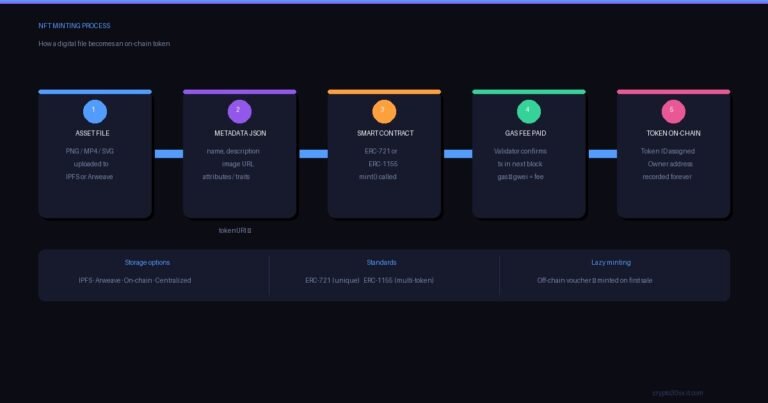
An NFT marketplace is a trading venue, fully decentralized or semi-centralized, where users can mint, list, buy, and sell non-fungible tokens. Most platforms execute transactions through smart contracts: code deployed on the blockchain that automatically transfers the asset and routes payment when a sale is confirmed. The marketplace earns a percentage of each transaction; the blockchain charges a separate network fee.
These two costs are independent of each other. One platform may charge low fees but run on a congested network with expensive gas; another may charge more at the platform level while operating on a near-zero-fee chain. Understanding this distinction shapes how any NFT marketplace comparison should be read.
How buyers and sellers interact
When a seller lists an NFT, the listing is anchored to a smart contract. A buyer who accepts the price triggers a contract call: the specific token transfers from the seller’s wallet to the buyer’s, and the payment routes automatically after deducting platform fees and any encoded creator royalties. No intermediary holds funds between execution and settlement.
Both parties need a compatible wallet funded with the chain’s native token. On Ethereum-based platforms, ETH covers both the purchase and gas. On Solana-based platforms, SOL handles network fees at a fraction of a cent per transaction.
Custodial vs. non-custodial models
Most established NFT platforms use a non-custodial model: assets remain in the user’s own wallet until the moment a transaction executes. The platform never takes possession of funds or tokens. Some gaming-oriented platforms use a custodial approach, where the platform manages tokens in an account on the user’s behalf.
Non-custodial is the standard for serious NFT activity. The tradeoff is full self-responsibility: losing wallet credentials on a non-custodial platform means permanent, unrecoverable loss of access to any assets held there.
Key criteria for an NFT marketplace comparison
An NFT marketplace comparison for beginners is most useful when it focuses on structural features that directly affect cost, safety, and access rather than interface design or brand familiarity. Four criteria account for most of the practical differences between platforms and should be evaluated before connecting a wallet or placing an order.
Supported blockchains
Each marketplace operates on a specific blockchain or set of blockchains. A platform built around Ethereum cannot list Solana NFTs, and a Solana-native platform will not display Ethereum collections. Multi-chain platforms exist, but liquidity typically concentrates on one chain regardless of nominal multi-chain support.
Blockchain choice determines the wallet software required (MetaMask for Ethereum-compatible chains; Phantom for Solana), the fee level (Ethereum gas fluctuates and can be substantial; Solana and Polygon fees are negligible), and the collection catalog available on the platform.
Fee structure: platform, gas, and royalties
Three separate costs apply to most NFT transactions:
- Platform fee: A percentage of the sale price taken by the marketplace on each transaction. Typical ranges across major platforms fall between 0% and 5%.
- Gas fee: The blockchain network’s processing cost, paid to validators. On Ethereum, this is variable and demand-driven. On Solana and Polygon, it is near-zero.
- Creator royalty: A percentage routed to the original creator on secondary sales. Historically between 5% and 10% on art-focused collections, but enforcement now varies significantly by platform.
The combined cost structure matters more than any single fee layer. A 0% platform fee becomes irrelevant if gas costs exceed the purchase price entirely.
Listing types available
Three standard mechanisms exist for selling an NFT:
- Fixed price: The seller sets a price; any buyer can complete the purchase immediately.
- Timed auction: A bidding window opens for a defined period; the highest offer at close wins.
- Open offers: Buyers submit bids on any token, listed or not; sellers accept or decline at any time.
Not every platform supports all three. Mechanics of auction settlement — who pays gas at close, whether bids are binding, how ties are resolved — differ by platform design.
Open vs. curated listing models
Open marketplaces let any creator list any token without review. This creates large catalogs but also means a significant share of listings on any given open platform are low-quality or fraudulent.
Curated platforms require creator applications, invitations, or editorial approval before any listing goes live. Average quality per listing is higher, but total catalog size is considerably smaller. For beginners targeting work from specific known artists, curated platforms reduce the verification burden. For beginners exploring collections broadly, open platforms offer more choice at the cost of more careful self-filtering.
General vs. specialized NFT platforms
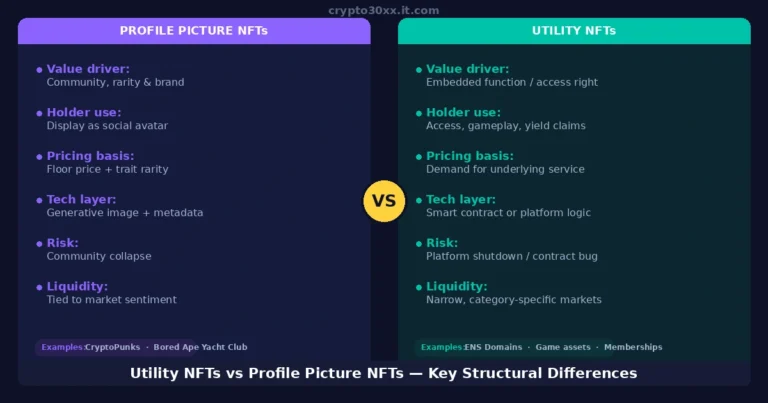
NFT platforms differ not just in feature sets but in the audience and use case they are built around. Matching the right platform type to your goal is a practical first step in any NFT marketplace comparison for beginners, because it narrows the field before you examine specific fees or blockchain support.
General open marketplaces
These support a wide range of NFT types: art, collectibles, gaming items, domain names, and more. Listing restrictions are minimal. They tend to have the largest collection counts, broadest wallet support, and most active secondary markets. The tradeoff is noise; buyers must verify listings independently, since scams and low-effort projects appear alongside legitimate collections.
Curated and invitation-only platforms
Platforms such as Foundation and SuperRare restrict listings to accepted or invited creators. Primary sales carry higher platform fees, but the audience concentrates around collectors seeking quality-controlled work. These platforms typically operate on Ethereum, where users are generally unconcerned with network fees.
NFT aggregators
An aggregator indexes listings from multiple marketplaces and lets buyers purchase from several sources in a single transaction, often at lower cumulative gas cost. Blur operates with aggregator functionality alongside its own marketplace. For high-volume collectors comparing prices across sources, aggregators reduce friction. For casual buyers making occasional purchases, a standard marketplace is simpler.
NFT marketplace comparison: major platforms side by side
Six widely used platforms are compared below across five dimensions: supported blockchains, approximate platform fees, creator royalty enforcement, curation model, and primary use case. Fee structures, royalty policies, and supported chains change; always verify terms directly on each platform before transacting.
| Platform | Primary blockchains | Platform fee (approx.) | Creator royalties enforced? | Curation model | Best suited for |
|---|---|---|---|---|---|
| OpenSea | Ethereum, Polygon, Solana, Base, Arbitrum, others | ~2.5% historically; verify current rate | Optional (buyer choice) | Open | Broad collection browsing and trading |
| Blur | Ethereum | 0% historically | Minimal / optional | Open + aggregator | High-volume collectors, pro traders |
| Magic Eden | Solana, Ethereum, Polygon, Bitcoin (Ordinals) | ~2% | Optional (configurable) | Open + featured | Solana-native collections, gaming NFTs |
| Rarible | Ethereum, Tezos, Polygon, Solana, Immutable X | ~1% per side | Enforced | Open | Multi-chain creators and collectors |
| Foundation | Ethereum | ~5% | Enforced (typically 10%) | Invitation-based | Digital art collectors |
| SuperRare | Ethereum | 3% buyer premium; higher on primary | Enforced (typically 10%) | Highly curated | Rare digital fine art |
How to evaluate an NFT marketplace as a beginner
Beginners who select a platform based on name recognition alone tend to encounter the same set of avoidable problems: wrong blockchain, unexpected fees, and illiquid collections. Working through five checks before any purchase resolves most of them before funds are committed.
- Match the marketplace to the blockchain: Find the smart contract address of the collection you want and confirm which blockchain it lives on. Then verify the marketplace has genuine trading volume on that specific chain, not merely nominal multi-chain support listed on a features page.
- Calculate the total transaction cost: Add the item price, estimated gas (check a network gas tracker before confirming), and the platform fee. Evaluate whether that total is reasonable as a fixed cost, independent of any assumption about future resale value. On Ethereum, gas alone can make low-value purchases impractical.
- Assess collection liquidity: Check 30-day trading volume and the number of unique buyers for the collection. High volume with a distributed holder base signals a liquid collection, one where selling is realistic if you later want to exit. Low volume or concentrated holdings signals difficulty finding buyers at any price.
- Check royalty enforcement: Determine whether the platform routes creator royalties automatically or leaves payment optional for buyers. This affects both your support for creators and your calculation of the actual cost of any secondary transaction.
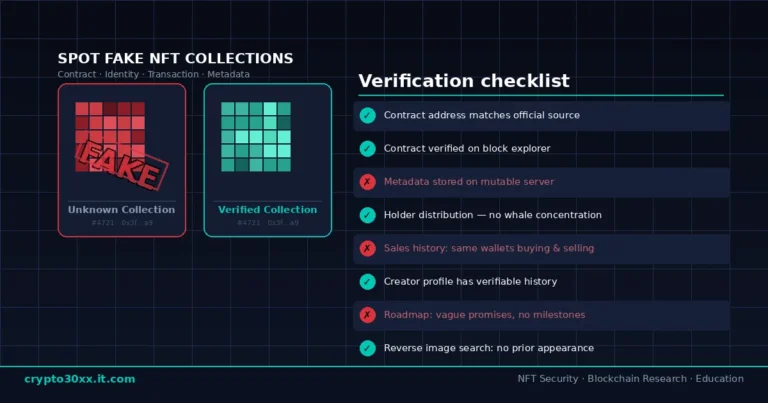
- Verify the contract address: On open platforms, scammers create collections with near-identical names and copied artwork. Find the official contract address from the project’s own verified channels and confirm it matches the marketplace listing before any funds are committed.
Common risks beginners face on NFT marketplaces
Risk on NFT platforms clusters around four specific patterns that don’t appear prominently in platform marketing or feature comparisons. Recognizing them before a first purchase changes how a beginner reads volume data, verifies collections, and accounts for the full cost of any transaction on any platform.
Gas fee volatility on Ethereum
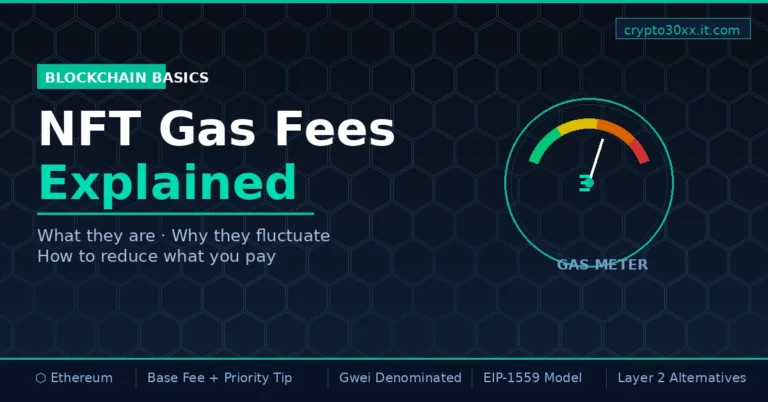
Ethereum gas fees fluctuate with network activity. During high-demand periods, fees can rise sharply enough to make small purchases economically irrational. A transaction submitted with too low a gas limit may fail while still consuming a partial fee. Checking a network gas tracker before confirming any transaction is standard practice, not optional.
Fake collections and impersonation listings
Open marketplaces allow anyone to deploy a collection under any name with any artwork. Scammers routinely copy popular projects to pixel-level accuracy and list them under names differing by a single character. The only reliable verification is the smart contract address: find the official address from the project’s verified channels and match it to the marketplace listing before any interaction.
Wash trading and inflated volume data
Wash trading, where a trader buys an NFT from their own wallet to simulate demand, inflates both volume figures and apparent floor prices. On platforms that reward high transaction counts through token incentive programs, this behavior is structurally encouraged. Beginners who read volume charts as proof of genuine demand can significantly overpay. Cross-referencing volume across independent analytics platforms gives a more accurate picture.
Royalty policy changes
NFT marketplaces have revised creator royalty enforcement multiple times in response to competitive pressure. A platform enforcing royalties today may shift to optional enforcement without advance notice. For creators who depend on secondary royalty income, monitoring platform policy updates is essential. For buyers, the royalty structure is a variable cost that affects total outlay on any secondary purchase.
FAQs
What is the best NFT marketplace for beginners? No single platform is universally best. The right starting point depends on which blockchain the collection you want is deployed on, whether you prioritize low fees or enforced creator royalties, and the type of NFT you are purchasing. General open marketplaces with broad blockchain support and active secondary markets tend to be the most accessible entry points for first-time buyers.
Do NFT marketplaces charge gas fees? The marketplace itself does not set gas fees. Those are paid directly to the blockchain network and fluctuate with demand. Ethereum-based platforms involve variable gas costs that can be substantial. Solana-based platforms have near-zero network fees. Some platforms offer Polygon as a lower-cost alternative for Ethereum-native users.
Can I use more than one NFT marketplace at the same time? Yes. Your wallet connects independently to each platform. You can list an NFT on one marketplace while browsing collections on another. If the NFT sells on any platform, that transaction invalidates listings elsewhere, since the token has transferred to a new owner.
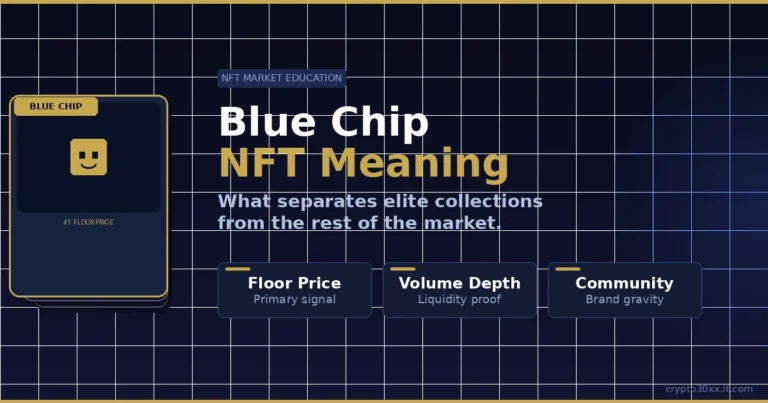
What is a floor price on an NFT marketplace? Floor price is the lowest asking price for any NFT within a given collection at a specific point in time. It represents the minimum cost to enter a collection, not a guaranteed resale value. Floor prices move with market sentiment and trading activity and can shift substantially within short periods.
What does “verified collection” mean on a marketplace? A verification badge indicates the platform has confirmed the collection is linked to its claimed creator or project. Criteria and reliability vary by platform. Verification reduces impersonation risk but does not constitute an endorsement of the collection’s quality or future value.
What is the difference between an NFT marketplace and a crypto exchange? A crypto exchange trades fungible tokens: assets interchangeable with each other at equal value. An NFT marketplace trades non-fungible tokens, where each asset is unique. Trades execute via smart contracts that transfer a specific token ID, not through order books matching identical units. The fee structure, wallet interaction, and settlement mechanics differ substantially.
Why do creator royalties matter in an NFT marketplace comparison? Creator royalties determine how much of every secondary sale routes back to the original artist or developer. For collectors who want to support creators financially, enforced royalties are a meaningful differentiator. For buyers focused on minimizing total transaction costs, optional royalty platforms reduce outlay. Royalty policy has shifted repeatedly across the industry and remains a live variable in platform selection.
Disclaimer
This article is produced by an independent cryptocurrency education and research blog for informational purposes only. Nothing in this guide constitutes financial or investment advice, nor a recommendation to buy, sell, or hold any digital asset. NFT markets carry substantial risk, including the potential for complete loss of invested capital. Conduct independent research and consult a qualified financial professional before making any financial decision.
An NFT marketplace comparison for beginners is most productive when it starts from three fixed reference points: the blockchain the target collection is deployed on, the total transaction cost across all fee layers, and the actual trading liquidity of the collection in question. Interface design and platform reputation are secondary considerations. Those three checks, applied before any wallet is connected or funds committed, account for the majority of the errors that cost beginners money in their first transactions on any platform.
Start strong and finish stronger with our end-to-end expert content guides.