How NFT royalties work: a complete guide to creator fees
NFT royalties are a fee mechanism built into non-fungible token contracts that automatically routes a percentage of every secondary sale back to the original creator. When an NFT changes hands on a marketplace, the smart contract governing that token can trigger a payment split, routing a defined share to the wallet address of the artist or developer who minted it. No invoice is required, no middleman steps in, and no manual action is needed from the creator. The logic executes on-chain once a qualifying sale is initiated.
This guide covers the full mechanics of how NFT royalties work: how fees are encoded into smart contracts, what the EIP-2981 standard does, how marketplaces process payments, what percentage ranges creators typically set, and why enforcement has become a contested issue in NFT market design. It is written for crypto learners and researchers, not as financial advice.
What are NFT royalties?
NFT royalties are programmable fees embedded in an NFT’s smart contract that direct a percentage of the resale price to the original creator each time the token is sold on the secondary market. The percentage is set at minting and travels with the token across every future transaction on any marketplace that chooses to honor it. They are not collected manually; the logic runs automatically when a qualifying sale occurs.
How royalties differ from traditional creator compensation
In most conventional art markets, a creator earns revenue once: at the initial sale. Subsequent transactions between collectors produce no additional income for the original artist, even when the work appreciates significantly. Music, publishing, and film industries developed separate licensing and performance-royalty frameworks to address this gap. Visual art had no equivalent structure.
NFT royalties change the equation through code rather than contract. Because ownership records and transaction logic live on a public, tamper-resistant blockchain, a payment split can be written into the asset itself and triggered by each future sale. The mechanism is elegant in design. Whether it functions as intended in practice is a separate question, and one that depends entirely on enforcement.
Who sets the royalty percentage?
The creator sets the royalty rate when they mint the NFT. The value is written directly into the smart contract and, in most standard implementations, cannot be changed after deployment. Some platforms allow creators to update the recipient wallet address without modifying the rate, which is useful for redirecting payments to a shared treasury, a new wallet, or a payment-splitting contract that distributes funds across multiple contributors.
How NFT royalties work mechanically
When an NFT sells on a secondary market, royalties flow through a three-part process: the marketplace reads royalty data encoded in the NFT contract, calculates the creator’s share from the sale price, and routes that amount to the creator’s wallet before the transaction completes. Each step relies on the interaction between two distinct layers: the NFT contract and the marketplace contract.
The role of smart contracts
A smart contract is self-executing code deployed on a blockchain. It contains conditions that trigger automatically when specific criteria are met. For NFTs, the relevant trigger is a transfer of ownership tied to a payment. The contract specifies: if this token is sold for a given amount, send a defined percentage of that amount to a designated address.
The calculation and payment routing are both handled by the code. No intermediary reviews or approves the transfer. This is what separates NFT royalties from any paper-based licensing arrangement: the terms are embedded in the asset itself, and those terms execute without human authorization once the sale is initiated.
EIP-2981: the Ethereum royalty standard
EIP-2981 is an Ethereum Improvement Proposal that created a standardized interface for NFT royalty data. Before this standard, individual marketplaces each developed their own royalty handling methods: fragmented, incompatible, and impossible to honor consistently across platforms. EIP-2981 addressed this by letting any conforming NFT contract expose two pieces of information in a predictable, machine-readable format:
- The recipient address where the royalty payment should go
- The royalty amount expressed as a fraction of the sale price, in basis points (where 10,000 = 100%, so 500 = 5%)
Any marketplace that queries an EIP-2981-compliant contract receives this data and can act on it. The standard works for both ERC-721 tokens (the most common NFT format) and ERC-1155 tokens (used for edition-based or semi-fungible NFTs). Other EVM-compatible chains have adopted it, making royalty data portable across networks that share the same token standards.
One distinction is critical: EIP-2981 signals royalty terms. It does not compel payment. The marketplace executing the transaction decides whether to honor those terms. This gap between signaling and enforcement is the root of every practical debate about how NFT royalties actually function in live markets.
The payment flow, step by step
On a marketplace that enforces royalties, a secondary sale follows this sequence:
- A buyer initiates a purchase transaction.
- The marketplace contract calls the royalty lookup function on the NFT contract.
- The royalty percentage is applied to the sale price to calculate the creator’s fee.
- The settlement logic separates the total payment into three amounts: royalty, marketplace fee, and seller proceeds.
- Each amount routes to its respective destination (creator wallet, platform wallet, or seller wallet) within the same transaction or a closely linked settlement sequence.
- The creator’s royalty payment arrives automatically, with no claim action required.
The seller receives the listed price minus the royalty and marketplace fee. The platform collects its cut. The creator’s share moves without any manual step on their part.
NFT royalty percentages: what creators set
NFT royalty percentages are set at minting and typically fall between 2.5% and 10% of the secondary sale price. Individual collections vary based on the collection type, the creator’s objectives, and the intended trading dynamics of the market. Rates above 10% exist but are far less common in high-volume secondary markets, where buyer and seller sensitivity to total transaction cost is higher.
| Collection type | Typical royalty range | Common reasoning |
|---|---|---|
| Profile picture (PFP) collections | 5%–10% | Fund ongoing community development and team operations |
| 1/1 digital art | 7.5%–15% | Reflect higher artistic stakes per individual piece |
| Gaming and utility NFTs | 2.5%–5% | Lower friction encourages active in-game trading |
| Music NFTs | 5%–10% | May include royalty splits between artist and collaborators |
| Sports and collectibles | 5%–10% | Set by the issuing organization based on licensing model |
A 10% royalty on a 1 ETH secondary sale produces 0.1 ETH for the creator on every future resale, on every marketplace that enforces it, automatically. For collections traded frequently over multiple years, cumulative royalty income can substantially exceed initial mint revenue, making royalty design one of the more consequential decisions a creator makes at launch.
How the percentage shapes secondary market behavior
Higher royalties reduce the seller’s net proceeds on every transaction. To reach a target profit, a seller must list at a proportionally higher price, which increases the friction between buy and sell prices in a collection’s secondary market. Over time, this affects liquidity: if total transaction costs (royalty plus marketplace fee) approach or exceed expected price appreciation, holders have less incentive to sell and buyers face less favorable entry prices.
Zero royalties remove this friction entirely, which can drive higher trading volume and price discovery. The trade-off is that the creator’s ongoing revenue stream disappears. Projects that choose this route typically design their economics around the initial mint as the primary revenue event, not the long tail of secondary trading.
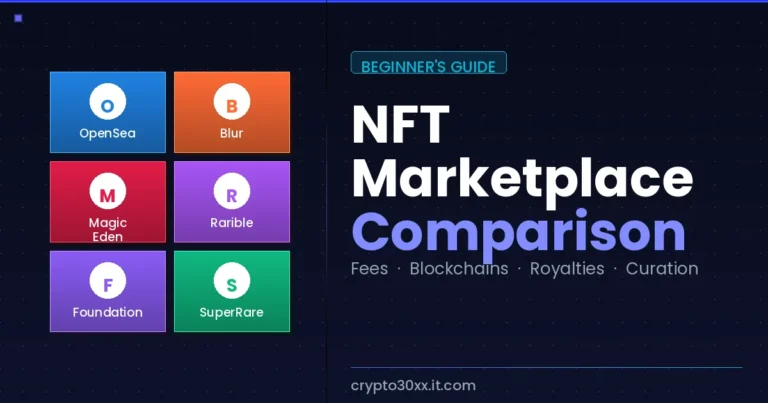
Which marketplaces enforce NFT royalties?
Marketplace enforcement of NFT royalties varies significantly across platforms and has shifted as competitive dynamics in NFT trading changed. Some platforms collect and forward royalties on every transaction, regardless of the amount involved. Others moved to optional models where buyers or sellers choose whether to include the creator payment. Some charge zero royalties by default. The platform executing the sale ultimately determines whether the creator receives any secondary income from that transaction.
| Enforcement model | How it works | Effect on creator earnings |
|---|---|---|
| Full enforcement | Royalties collected and distributed on every sale | Consistent per-transaction income |
| Optional enforcement | Buyer or seller elects to include royalties | Variable; can reach zero |
| Zero-royalty default | Platform does not enforce royalties | Creator earns nothing from resales on this platform |
| Multi-source aggregators | Routes orders across platforms; enforcement depends on source | Often lower or zero |
How optional royalties became widespread
Competitive pressure pushed several major marketplaces away from full enforcement. When newer entrants launched with zero-royalty models to attract cost-sensitive traders, established platforms faced a direct choice: maintain full enforcement and accept trading volume losses, or reduce royalties to compete for that volume.
Several large platforms chose to compete. The structural outcome was a broad reduction in secondary royalty income for many NFT creators, particularly those in high-volume collections where trading activity migrated to lower-cost venues. Collections that launched with persistent royalty income as a core revenue assumption found that income unreliable once marketplace policies diverged.
How royalties get bypassed in practice
Beyond formal marketplace policy, royalties can be circumvented through technical paths that never involve a royalty-enforcing contract:
- Peer-to-peer transfers: A direct wallet-to-wallet transfer, with payment handled off-chain (cash, wire, or a separate crypto transaction), passes through no marketplace contract at all. No royalty lookup fires.
- Contract wrappers: Some tools wrap an NFT inside a secondary contract that executes the sale without triggering the original royalty logic in the token contract.
- Zero-royalty platform routing: Aggregators that pull liquidity from multiple sources may route orders through whichever venue offers the best price, most often a platform with zero royalty enforcement.
None of these methods violate any law. They are structurally possible because EIP-2981 is advisory rather than binding at the protocol level.
On-chain royalty enforcement: what has been tried
Several approaches have been built to make NFT royalties structurally harder to bypass, each attempting to move enforcement from a marketplace policy into the token’s own transfer logic. Transfer restriction mechanisms and operator filter registries are the two most significant attempts, both designed to make royalty compliance a condition of token transferability rather than a voluntary platform decision. Neither has achieved broad adoption without meaningful trade-offs.
Transfer restrictions and operator filters
One approach lets an NFT contract restrict which marketplace contracts are authorized to transfer the token. If a transfer is attempted through an unauthorized contract, the transaction fails. Royalty compliance becomes a structural requirement: the token cannot trade on non-compliant platforms.
The trade-off is direct: restricting authorized transfer destinations limits where a collector can sell. A buyer on a non-approved platform cannot complete the purchase, regardless of the price they are willing to pay. This reduces price discovery and secondary market liquidity, which typically depresses secondary valuations. Some creator communities have adopted transfer restrictions deliberately, accepting the liquidity cost in exchange for more reliable royalty income. Others have avoided it entirely for that same reason.
Why full protocol-level enforcement is technically difficult
The ERC-721 transferFrom function moves token ownership without any payment condition attached. There is no hook in the base transfer logic for royalty calculation; the function simply changes the owner field in the contract state. Payment must occur at the marketplace contract layer, and the marketplace controls whether it includes a royalty step.
Enforcing royalties at the base protocol level would require changing how ERC-721 tokens behave at their core. That change would have cascading effects on every application that interacts with NFTs: DeFi lending platforms, portfolio tools, gaming protocols, and cross-chain bridges all depend on standard transfer behavior. Modifying it requires broad agreement across the Ethereum development community, and that agreement has not formed.
What NFT royalties mean for collectors
For NFT buyers, royalties matter even though they are deducted from seller proceeds rather than added to the buyer’s payment. Understanding how royalty terms shape resale economics helps any collector evaluate the secondary market dynamics of a collection before buying in, and helps explain price behavior that might otherwise seem counterintuitive.
How royalties are reflected in list prices
A 10% royalty means a seller nets 90 cents on every dollar of sale price, before marketplace fees. To reach a specific profit target, the seller needs a proportionally higher list price. In efficient secondary markets, sellers factor this into their asking prices, which pushes nominal price levels higher than they would be for equivalent royalty-free assets.
The royalty cost is indirect for buyers at the point of purchase: they pay the listed price, not listed price plus a royalty charge. But when sellers build royalty costs into their pricing, the difference appears in what buyers must pay to acquire the asset. Both sides of the market absorb the cost, just at different points in the transaction.
How to verify royalty terms before buying
Royalty information is accessible through several channels before completing any secondary purchase:
- Most marketplace listing pages display the royalty percentage in the transaction breakdown or the collection details panel.
- The NFT’s contract address can be queried on a blockchain explorer such as Etherscan to view EIP-2981 royalty parameters, if the contract implements the standard.
- Collection-level aggregator sites commonly display royalty rates as part of the collection metadata summary.
Since rates are fixed at contract deployment in most standard implementations, the figure visible on-chain represents the permanent royalty for that token. It cannot be increased after the fact.
FAQs
Do NFT royalties apply automatically to every resale? They are encoded to apply to every secondary sale, but actual payment depends entirely on the marketplace executing the transaction. Sales conducted peer-to-peer, on zero-royalty platforms, or through non-compliant aggregators may generate no royalty payment, even when the contract specifies clear royalty terms via EIP-2981.
Can a creator change the royalty rate after minting? In most standard NFT contracts, the rate is fixed at deployment and cannot be updated. Some implementations allow the recipient address to be changed for redirecting payments to a new wallet or treasury, but modifying the percentage itself generally requires deploying an entirely new contract and migrating the collection.
What blockchain do most NFT royalties run on? Most NFT royalty infrastructure runs on Ethereum and EVM-compatible chains including Polygon, Base, and Arbitrum. EIP-2981 is an Ethereum standard, though other blockchain environments have developed similar royalty signaling mechanisms for their own native token formats and smart contract standards.
Are NFT royalties the same as gas fees? No. Gas fees are network transaction costs paid to validators for processing blockchain operations. Royalties are creator payments triggered by a resale event. Both appear in a typical secondary sale transaction, but they serve entirely different purposes and go to different destinations.
What happens if a marketplace ignores EIP-2981 royalty data? The transaction completes normally, and the creator receives nothing from that sale. The buyer’s payment flows to the seller minus only the marketplace’s own fee. Ignoring the EIP-2981 data is straightforward because the standard carries no self-enforcement mechanism at the protocol level.
Can royalties be split among multiple creators or contributors? EIP-2981 designates a single recipient address per token. To distribute royalties across co-creators, a team, or a charitable fund, projects typically route the royalty to a payment splitter contract. When royalties arrive, the splitter automatically distributes funds to each designated address according to preset percentage shares.
How are NFT royalties typically treated for tax purposes? Tax classification varies by jurisdiction and has not been uniformly codified in most countries’ tax frameworks. Royalty income received by creators may be classified as ordinary income in some jurisdictions; buyers generally have no royalty tax obligation. This guide is not tax advice; consult a qualified tax professional for guidance specific to your situation and jurisdiction.
What is the difference between an NFT royalty and a creator fee? The terms are often used interchangeably. “Creator fee” is a plain-language label that some marketplaces apply instead of “royalty” to make the concept more accessible. Both refer to the same mechanism: a percentage of secondary sale proceeds routed automatically to the original minter at the time of each resale.
Disclaimer
This article is published for educational and research purposes only. It does not constitute financial, investment, legal, or tax advice. NFT markets involve substantial risk, including the potential for complete loss of capital. Royalty enforcement policies vary by platform and change over time; always verify marketplace terms directly before transacting.
NFT royalties represent one of the more structurally interesting experiments in digital creator economics: passive resale income that is not negotiated contract by contract, but written into the asset and executed automatically. The mechanism works through a combination of smart contract logic and marketplace enforcement decisions. The gap between those two layers is where most real-world outcomes are determined: the code signals the royalty amount, and the platform decides whether to honor it. Understanding how NFT royalties work means understanding both the technical design and the market forces that shape whether it functions as intended.
Read less, learn more with our condensed expert knowledge posts.