Dogecoin price factors explained: the complete guide
Dogecoin price factors explained: Dogecoin price factors are the structural forces, market conditions, and behavioral dynamics that push the value of DOGE up or down. Unlike Bitcoin, whose price is heavily shaped by institutional demand and a hard supply cap, Dogecoin sits in a different position: it was born as a joke, carries no supply ceiling, and has historically moved more on crowd psychology than on-chain fundamentals. Understanding those forces — from its inflationary tokenomics and its correlation with Bitcoin to the outsized role of social media narratives — gives researchers and analysts a cleaner picture of why DOGE behaves the way it does.
What actually determines the Dogecoin price?
Dogecoin price is determined by a combination of supply-side tokenomics, macro market cycles, social sentiment, adoption signals, and regulatory conditions. No single factor controls it. In practice, the weights shift depending on the environment: during risk-on crypto bull markets, sentiment and narrative dominate; during bear phases, supply pressure and thin demand become the larger drag. The interaction between these forces produces DOGE’s characteristic volatility — sharper on the upside and downside than most large-cap assets.
The demand and supply foundation
Supply and demand provide the baseline. Dogecoin adds a fixed 5 billion DOGE to circulation every year through block rewards — miners receive 10,000 DOGE per block, with blocks produced roughly every minute. This works out to approximately 5.2 billion new coins annually. There is no hard cap; issuance continues indefinitely.
The key implication is that demand must grow at a pace that absorbs new supply just to keep price stable. If demand stagnates or falls, that constant inflow of new coins exerts downward pressure. This dynamic is structurally different from Bitcoin, where the block reward halves approximately every four years and eventually approaches zero.
That said, the rate of inflation decreases over time. When the circulating supply was 100 billion DOGE, adding 5 billion represented 5% annual inflation. As the supply grows toward 200 billion, the same 5 billion addition represents roughly 2.5%. The percentage shrinks; the absolute number stays fixed. This makes Dogecoin technically disinflationary even though it is nominally inflationary.
How Dogecoin’s supply model compares to other assets
| Asset | Supply type | Annual issuance | Inflation behavior |
|---|---|---|---|
| Dogecoin (DOGE) | Uncapped | ~5 billion DOGE fixed | Rate falls as supply grows |
| Bitcoin (BTC) | Hard cap (21M) | Halves ~every 4 years | Approaches zero |
| Litecoin (LTC) | Hard cap (84M) | Halves ~every 4 years | Approaches zero |
| Ethereum (ETH) | No hard cap | Variable (post-Merge) | Net deflationary at high activity |
| US Dollar (USD) | No cap | Set by central bank | Targets ~2% annually |
Dogecoin’s design resembles a currency model more than a “digital gold” model. The Foundation’s stated intention was always to produce a coin people would spend and tip rather than hoard — and the tokenomics reinforce that intent.
How Bitcoin and the broader market cycle affect DOGE
Dogecoin does not trade in isolation. Its price is closely tied to the direction of Bitcoin and the wider crypto market cycle — more so than most traders account for.
The Bitcoin correlation
Bitcoin acts as the macro floor for virtually every major altcoin, and Dogecoin is no exception. Measured correlation between BTC and DOGE over 30-day windows has ranged from roughly 0.65 to 0.97 depending on the phase of the cycle, with the relationship tightening considerably during sharp moves in either direction.
The mechanism is fairly straightforward. Most retail participants enter and exit the crypto market through Bitcoin. When BTC rises, confidence in the broader asset class improves, liquidity follows altcoins, and DOGE benefits. When Bitcoin sells off, the same participants tend to liquidate their higher-risk positions first. Dogecoin — sitting in the speculative, meme-driven corner of the market — is typically one of the first assets to drop and often drops harder in percentage terms.
Altcoin season dynamics
There is a recurring pattern in crypto market cycles where Bitcoin dominance peaks, then weakens, and capital rotates into altcoins. During these periods, Dogecoin often outperforms BTC in percentage terms because of its high retail name recognition, deep exchange liquidity, and cultural visibility. This rotational dynamic has been observed across multiple market cycles.
The flip side is equally predictable. When Bitcoin dominance recovers — typically after an altcoin-led rally exhausts itself — Dogecoin tends to correct sharply. Its high-beta relationship with BTC means it amplifies both directions of the underlying market.
Social sentiment, media coverage, and celebrity influence
Sentiment is arguably the most volatile price input for Dogecoin. No other top-20 cryptocurrency has historically been as reactive to social signals.
How social media moves DOGE
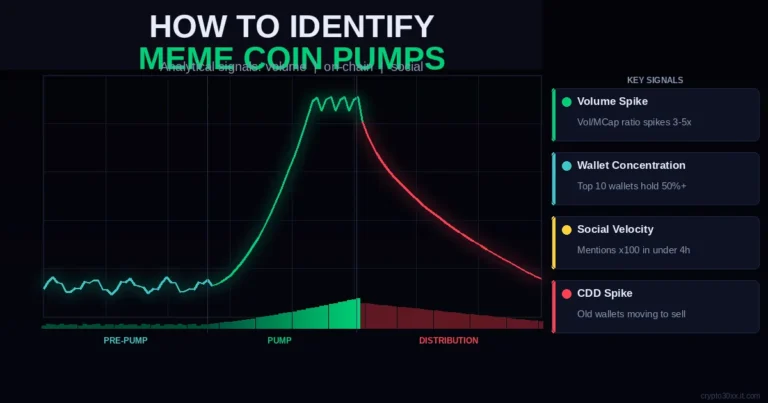
Platforms like X (formerly Twitter), Reddit, and TikTok serve as the primary distribution channels for Dogecoin narratives. A post from a high-profile account can produce double-digit price moves within hours. The same mechanics that make meme culture spread virally also apply to meme coin prices: a wave of attention drives buying, price rises, price rise attracts more attention, and the cycle continues until the wave breaks.
This is not unique to Dogecoin — most meme-originated tokens share this sensitivity — but DOGE has the largest and most established community of the category, which amplifies both the magnitude and the speed of social-driven moves.
The mechanics of sentiment-driven pricing:
- Positive media attention increases retail search volume, which correlates with new buyers entering the market
- Viral campaigns on social platforms create reflexive demand loops where rising price is itself the news
- Negative coverage or muted attention accelerates selling among speculative holders who entered during the hype cycle
- The absence of fundamentals to “anchor” price during downturns means sentiment reversals tend to be steep
The influence of high-profile figures
Dogecoin’s history includes documented cases where statements from public figures produced measurable short-term price reactions. This creates a structural feature analysts call “key-person risk” — the price becomes partially dependent on the statements and actions of specific individuals rather than on network-level developments. That sensitivity tends to fade over time as price action desensitizes markets to repetitive signals, but it does not disappear entirely.
The broader implication is that Dogecoin’s price partially reflects speculative demand driven by identity and affiliation rather than intrinsic utility — a characteristic it shares with other assets where brand and narrative dominate fundamentals.
Adoption, utility, and real-world demand signals
Longer-term price stability requires a demand source beyond speculation. For Dogecoin, this means real-world utility — transactions, merchant acceptance, tipping, and broader payment use.
How payment adoption affects price
When a business accepts DOGE, it theoretically creates transactional demand. Buyers need to acquire DOGE to pay; this generates real demand that is distinct from speculative demand. The practical effect on price depends on volume and velocity: a small number of merchants accepting DOGE does not move markets, but sustained growth in transactional use over time reduces reliance on sentiment as the sole price driver.
Dogecoin has several technical characteristics suited to payment use: block times of approximately one minute (versus Bitcoin’s ten), low per-transaction fees, and reasonable throughput capacity. These are genuine structural advantages for small payments.
ETF and institutional access as a demand multiplier
When regulated investment products that hold DOGE become available, they open the asset to capital that cannot or would not hold cryptocurrency directly. The creation and redemption mechanics of exchange-traded products generate real buying and selling of the underlying asset, linking traditional capital flows to DOGE price.
Institutional access can reduce price volatility over time by broadening the holder base and increasing liquidity depth. It also tends to require regulatory clarity, which creates a feedback loop: institutional interest grows when the regulatory environment becomes more predictable.
How regulatory conditions shape Dogecoin’s price environment
Regulation does not directly set the price of any cryptocurrency. What it does is define the conditions under which demand can grow or contract.
The mechanism of regulatory impact
- Favorable regulation expands the pool of potential buyers (institutions, funds, retail platforms) and creates confidence that the asset will remain accessible and tradeable
- Restrictive regulation reduces exchange access, creates legal uncertainty for businesses accepting crypto, and can trigger forced selling from entities no longer permitted to hold
- Regulatory uncertainty is itself a pricing factor — it depresses institutional demand while speculative retail demand remains
Classification matters particularly for Dogecoin. Whether an asset is treated as a commodity, a security, or simply a digital currency determines which regulatory frameworks apply, which entities can hold it, and how it is treated for tax purposes.
Exchange listing and delistings
Access to major regulated exchanges is a direct adoption gate. When DOGE becomes available on a large retail platform, it immediately reaches millions of potential buyers who otherwise would not hold it. Delistings or access restrictions work in reverse. The effect is not permanent — prices adjust and trading migrates — but the short-term impact on liquidity and price is significant.
Risks and limitations every analyst should understand
Any honest analysis of Dogecoin price factors has to address the features that make this asset structurally different from most of the market — and structurally riskier for certain participants.
The absence of a supply ceiling
Bitcoin’s 21 million coin limit creates a predictable scarcity narrative that underpins its store-of-value argument. Dogecoin’s perpetual issuance undermines that same narrative. For DOGE to hold or grow in price over time, demand must continuously absorb new supply. If adoption growth stalls, supply pressure pushes prices down. This is not a fatal flaw — many functioning currencies operate with continuous issuance — but it means Dogecoin needs genuine use-case growth to maintain price stability, not just narrative momentum.
Concentration and whale risk
A significant portion of the DOGE supply is held by a small number of addresses. Large holders moving substantial quantities through markets can produce disproportionate price impact, particularly during low-liquidity periods. This concentration risk is observable on-chain and represents a persistent structural feature of the asset.
Sentiment fragility
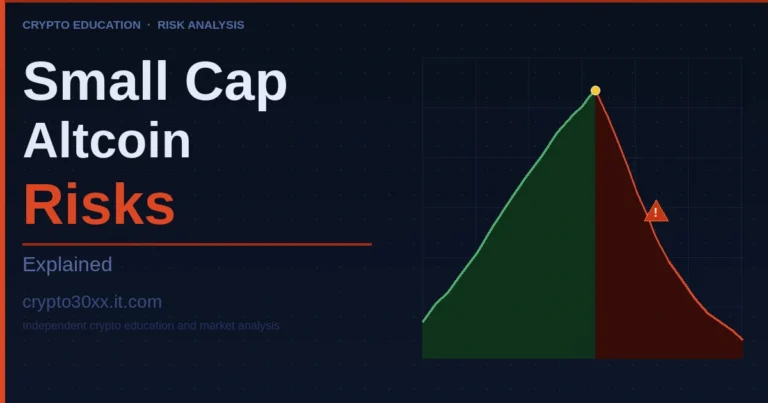
When sentiment is the primary driver of price, reversals can be sudden and severe. A crypto learner or researcher examining Dogecoin’s historical chart will notice patterns where price peaked rapidly and then retraced most of the gain before consolidating. These patterns reflect the mechanics of speculative sentiment cycles, not fundamental deterioration — but for participants who entered during the hype phase, the outcome is the same.
Limited intrinsic development activity
Compared to protocol-layer blockchains like Ethereum, Dogecoin has a smaller developer community and slower protocol development pace. Its codebase originated as a fork of Litecoin, which itself forked from Bitcoin. Major upgrades require community consensus and move slowly. This limits Dogecoin’s ability to add new utility through protocol innovation, making adoption-driven demand harder to generate from within the ecosystem.
DOGE versus other speculative assets: a risk comparison
| Risk factor | DOGE | BTC | Large-cap altcoins |
|---|---|---|---|
| Supply pressure | High (perpetual issuance) | Low (hard cap, halvings) | Mixed |
| Sentiment dependency | Very high | Moderate | High |
| Development activity | Low | Moderate | Varies |
| Regulatory exposure | Moderate | Lower (commodity framing) | Varies |
| Whale concentration | High | High | Varies |
| Exchange liquidity | High | Very high | Varies |
Historical patterns in Dogecoin price behavior
Without referencing specific live prices, the documented historical pattern of DOGE shows several recurring features that researchers find analytically useful.
Cycle amplification
In observed market cycles, Dogecoin has moved both faster and farther than Bitcoin in percentage terms during bull phases. The same acceleration applies on the downside. This beta relationship with the broader market is consistent across cycles and aligns with what would be expected from an asset where speculative demand and social narratives are primary price drivers.
Sentiment cycles and peak patterns
Dogecoin’s price peaks have historically coincided with periods of peak retail attention — measurable through search volume, social media post counts, and trading volume spikes. These peaks tend to be followed by rapid price consolidation as new entrants face selling from earlier holders taking profits. The magnitude of the peak and the depth of the subsequent correction are directly tied to the intensity of the sentiment cycle that preceded them.
Low nominal price as a psychological factor
DOGE has historically traded at a low nominal price per coin, which creates a psychological accessibility signal for retail participants. The perception of “affordability” — even though what matters economically is market capitalization, not unit price — has historically served as a demand driver during periods of broad public interest in crypto. This is an observed behavioral pattern, not a fundamental.
FAQs
What is the single biggest factor in Dogecoin’s price? Social sentiment and broader crypto market direction together account for most of Dogecoin’s short-term price movement. In the absence of major adoption events or regulatory developments, where Bitcoin goes and what narratives circulate on social platforms are the primary signals to watch.
Does Dogecoin’s unlimited supply permanently suppress its price? Not automatically. An uncapped supply means price stability requires ongoing demand growth to absorb new coins. The inflation rate decreases over time as the fixed 5-billion annual issuance becomes a smaller percentage of a growing total supply. A currency with persistent use cases can sustain price under gradual inflation — but stagnant demand alongside perpetual issuance does exert downward pressure.
How closely does DOGE track Bitcoin? Historically, the 30-day correlation between DOGE and BTC has ranged from roughly 0.65 to above 0.90 depending on market conditions, tightening during large moves in either direction. DOGE tends to outperform BTC during altcoin seasons and underperform during risk-off phases.
Why do celebrity endorsements move DOGE so much? Because most of Dogecoin’s value is driven by speculative demand rather than utility-based demand. When speculative demand is the primary driver, any credible signal of increased attention — from a public figure, a media cycle, or a viral campaign — can trigger rapid buying. The effect tends to be asymmetric: positive signals create sharp spikes; the absence of those signals leads to slow erosion.
Does merchant adoption permanently change DOGE’s price? Merchant adoption creates transactional demand, which is more stable than speculative demand. In theory, wider acceptance as a payment method provides a price floor that does not depend on sentiment cycles. In practice, the current volume of DOGE transactional use is small relative to total trading volume, so speculative flows still dominate short-term price action.
What role does regulation play in DOGE price? Regulation shapes the environment in which demand can grow. Favorable regulatory frameworks expand the potential buyer pool by enabling institutional investment products and maintaining exchange access. Regulatory uncertainty suppresses institutional demand and can trigger sell pressure if large holders face compliance risk.
How does the Dogecoin inflation rate change over time? The absolute amount of new DOGE issued each year is fixed at roughly 5 billion. The percentage inflation rate declines as the total supply grows. At a circulating supply of roughly 100 billion, annual issuance represents approximately 5%. At 200 billion, the same 5 billion new coins represent approximately 2.5%. This disinflationary trajectory continues indefinitely.
Is DOGE price affected by the same macro factors as equities? Partially. Crypto assets, including DOGE, have shown correlation with broad risk-on/risk-off movements in traditional markets during periods of macro stress. When liquidity tightens globally, speculative assets of all types — equities, crypto, high-yield credit — tend to fall together. DOGE, sitting at the speculative end of the crypto spectrum, is among the assets most sensitive to these macro liquidity shifts.
Disclaimer
This article is written for educational and research purposes only. Nothing in this guide constitutes financial, investment, legal, or tax advice. Cryptocurrency markets, including Dogecoin, are highly volatile. The value of digital assets can fall as well as rise, and past price patterns do not indicate future performance. Readers should conduct independent research and consult qualified professionals before making any financial decisions.
Dogecoin price is shaped by a specific combination of forces that distinguishes it from most assets in the crypto market: an inflationary but disinflationary supply curve, a persistent correlation with Bitcoin’s macro direction, acute sensitivity to social sentiment and narrative cycles, and a developing but still limited base of real-world utility. The practical takeaway for analysts and researchers is that no single factor explains DOGE price behavior — the weighting shifts depending on whether the market is in a risk-on or risk-off environment, whether a sentiment cycle is building or exhausting, and whether external adoption events create structural demand beyond speculation.
Our peaceful reflections remind you that growth does not have to feel loud inside our warm library.